What the Conduit Mouth Tells You
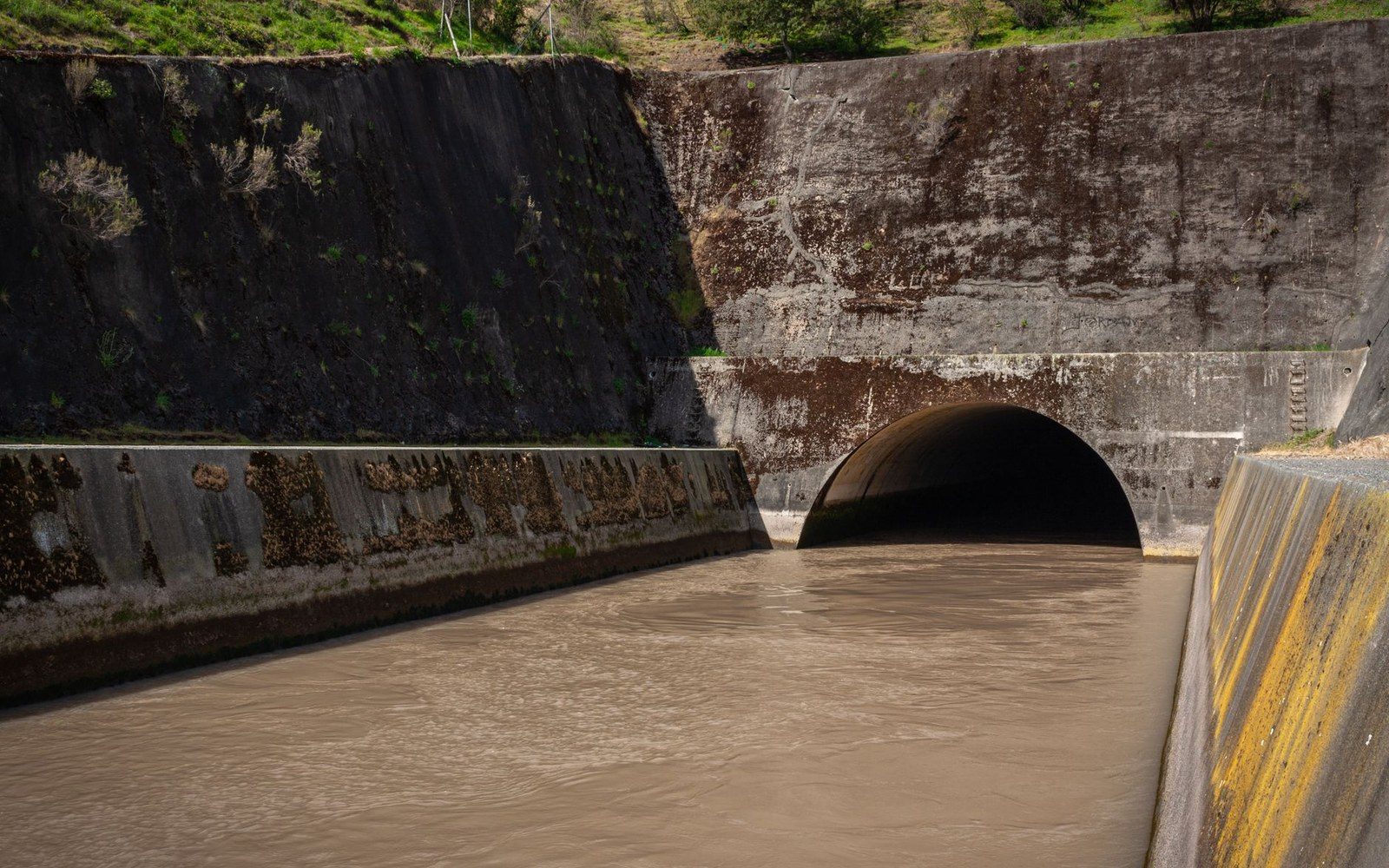
The Taylorsville dam outlet works — the scale of the ungated opening, the stain line on the concrete above it marking historical water-stand depth, and what normal-condition flow through it looks like versus a wet week in March.
Reading the concrete before the flood arrives
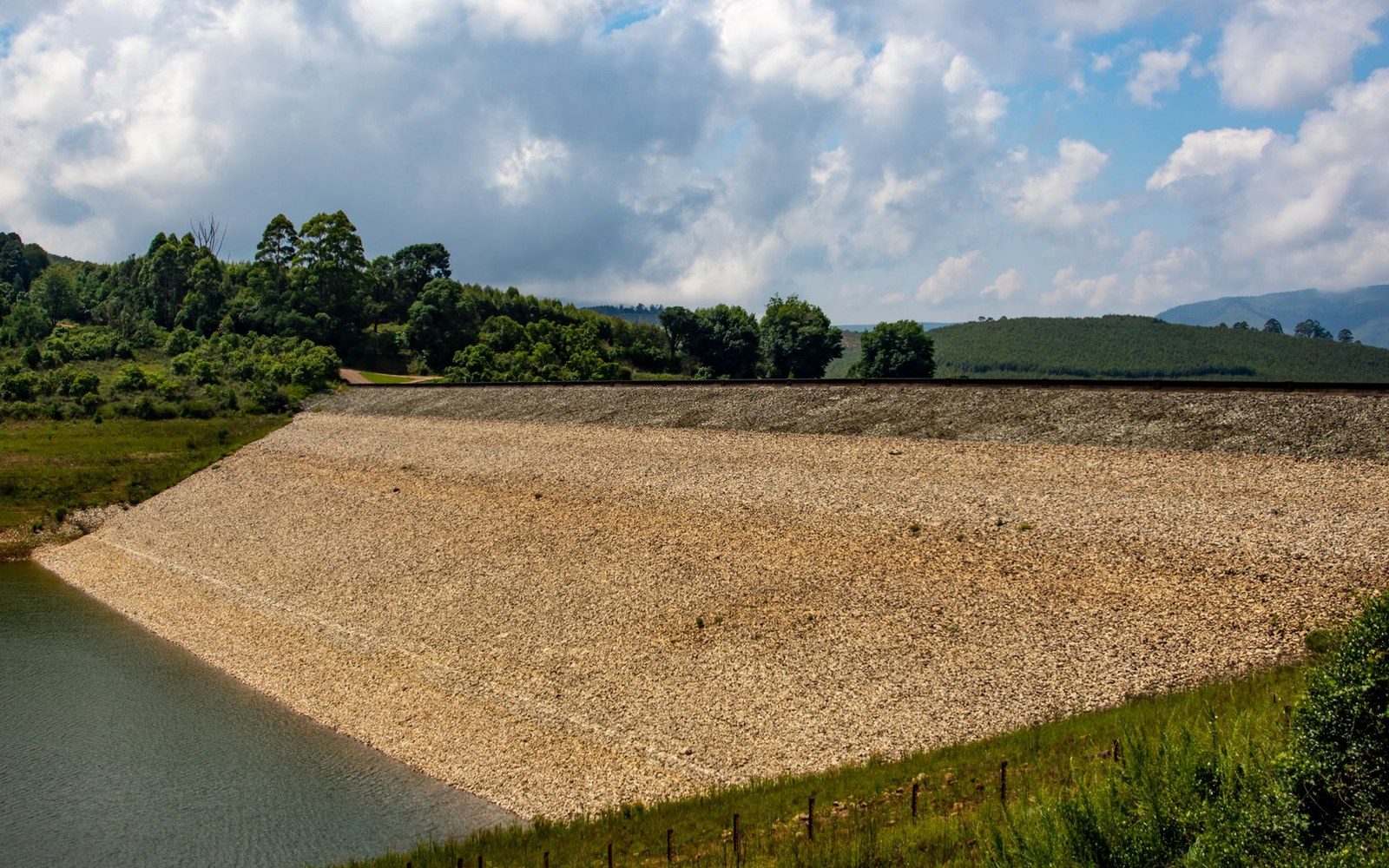
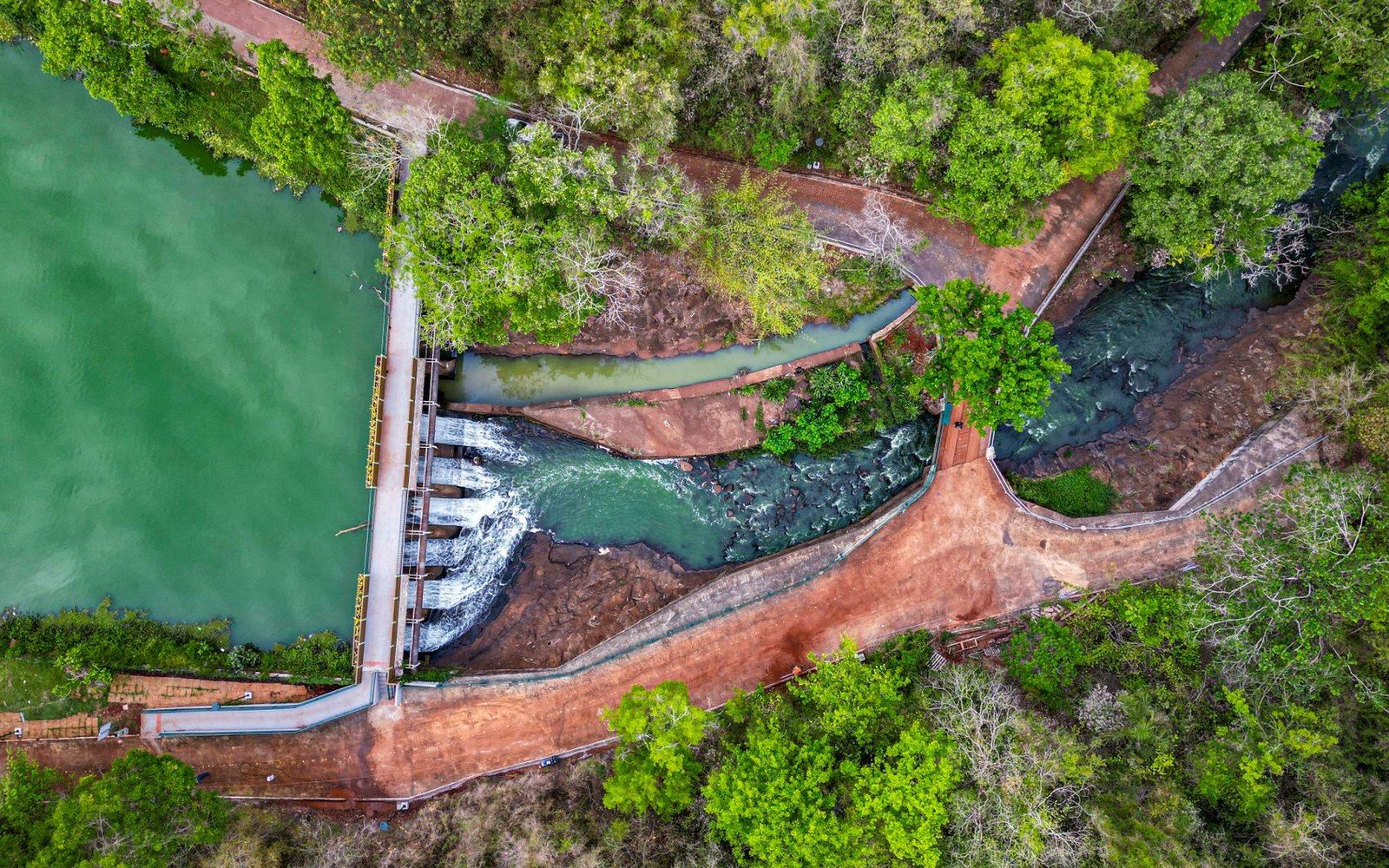
The outlet at Taylorsville Dam sits at the base of the embankment's downstream face, a plain rectangular opening in mass concrete that neither operator nor gate controls. Water that enters the basin upstream finds its way here by gravity alone, passes through the conduit, and exits into the Great Miami River below — the same in a dry August as in a swollen March. That self-regulating constancy is the design's whole point.
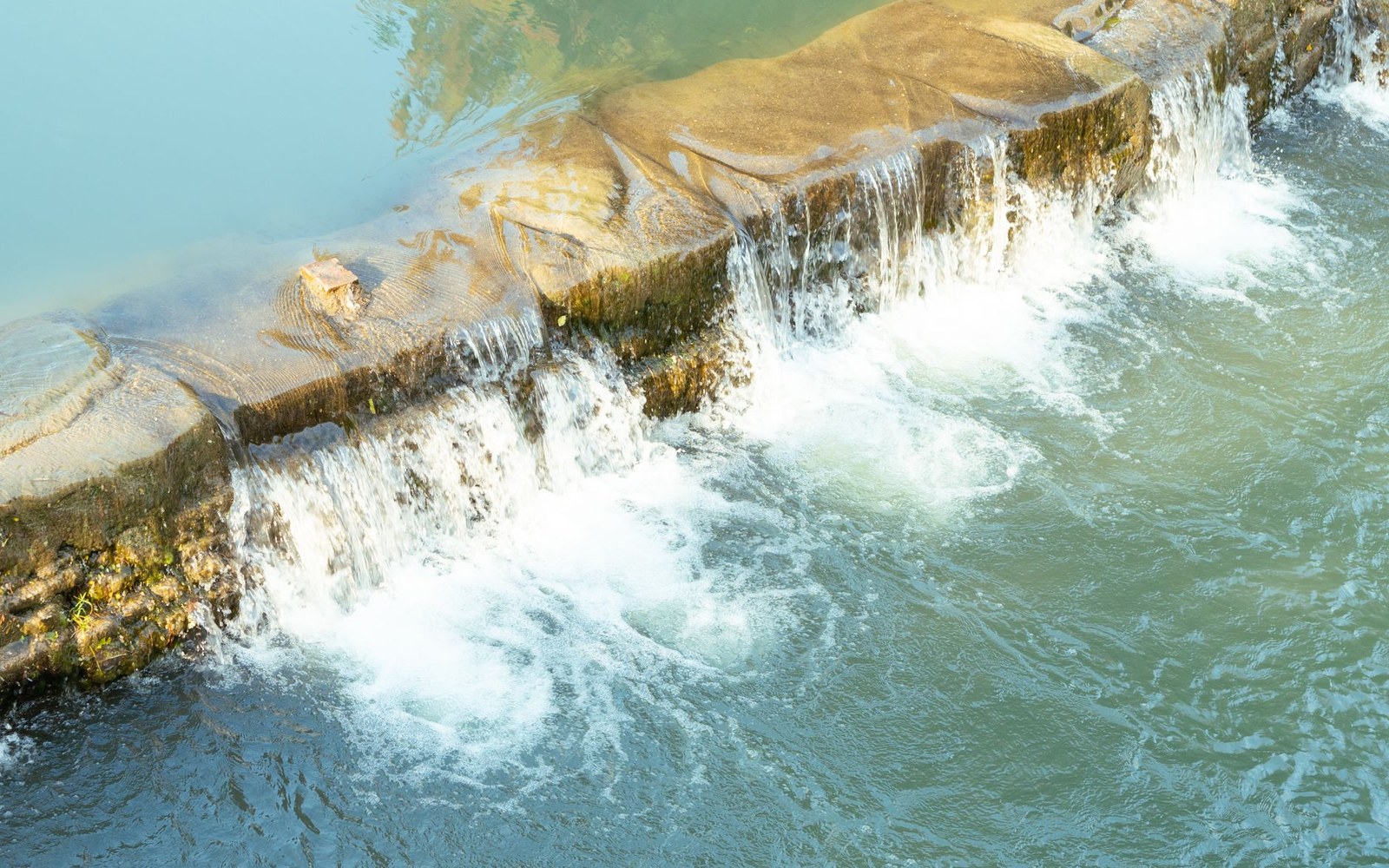
The opening itself is modest relative to the embankment above it. The Taylorsville structure — one of the five retarding basins the Miami Conservancy District completed by 1922 — carries an ungated conduit sized to pass ordinary flow while allowing the basin behind it to fill under flood conditions. During normal weather, the outflow at the conduit mouth is shallow and quick, water sheeting across the concrete sill with nothing dramatic about it. The visible face of the conduit is squared off, the concrete weathered but intact, the geometry utterly functional.
What distinguishes Taylorsville from a glance at any rural culvert is the stain record on the concrete above the opening. High-water marks — mineral deposits and organic discoloration laid down each time the basin held a significant pool — sit as horizontal bands above the mouth's upper edge. The highest legible band corresponds roughly to the design water surface the basin is engineered to reach under the controlling storm: an elevation calculated during the District's original 1913–1921 planning by Arthur Morgan's engineering team and since confirmed by subsequent hydrology. Reading those bands is reading the basin's operational history without opening a file.
In a wet week in March, the difference is audible before it is visible. The conduit runs full, the exit plume spreading wide against the tailwater, and peak discharge through that fixed mouth is dictated entirely by the head of water behind it — no valve to turn, no operator required. The concrete just does what it was designed to do, exactly as it has since the early 1920s.