A Dam That Stores Nothing
The structural logic of a dry retarding basin: embankment, ungated conduit, and the design water surface. Argues that the absence of a gate is the whole idea, not an omission.
The Structure Makes the Argument
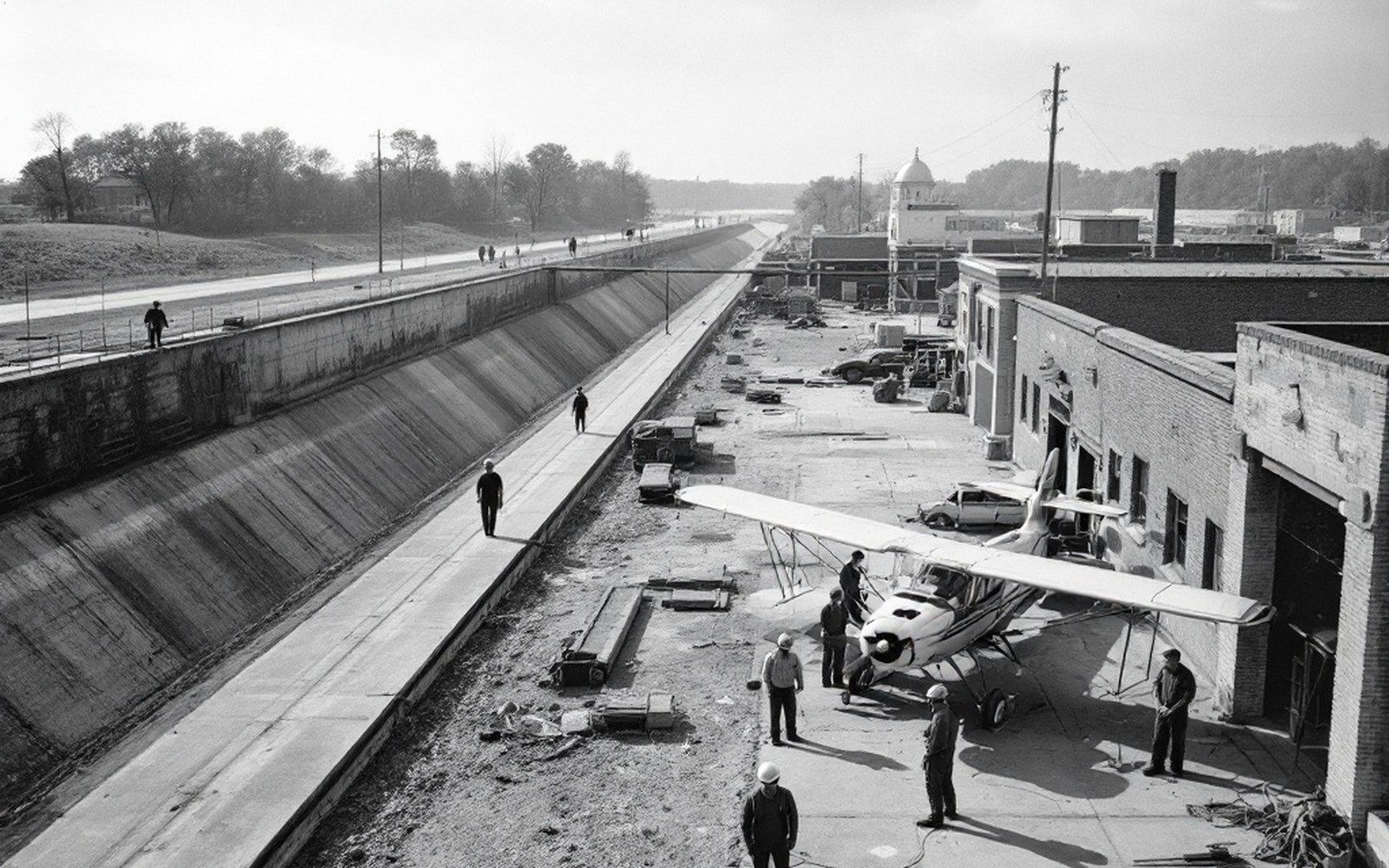
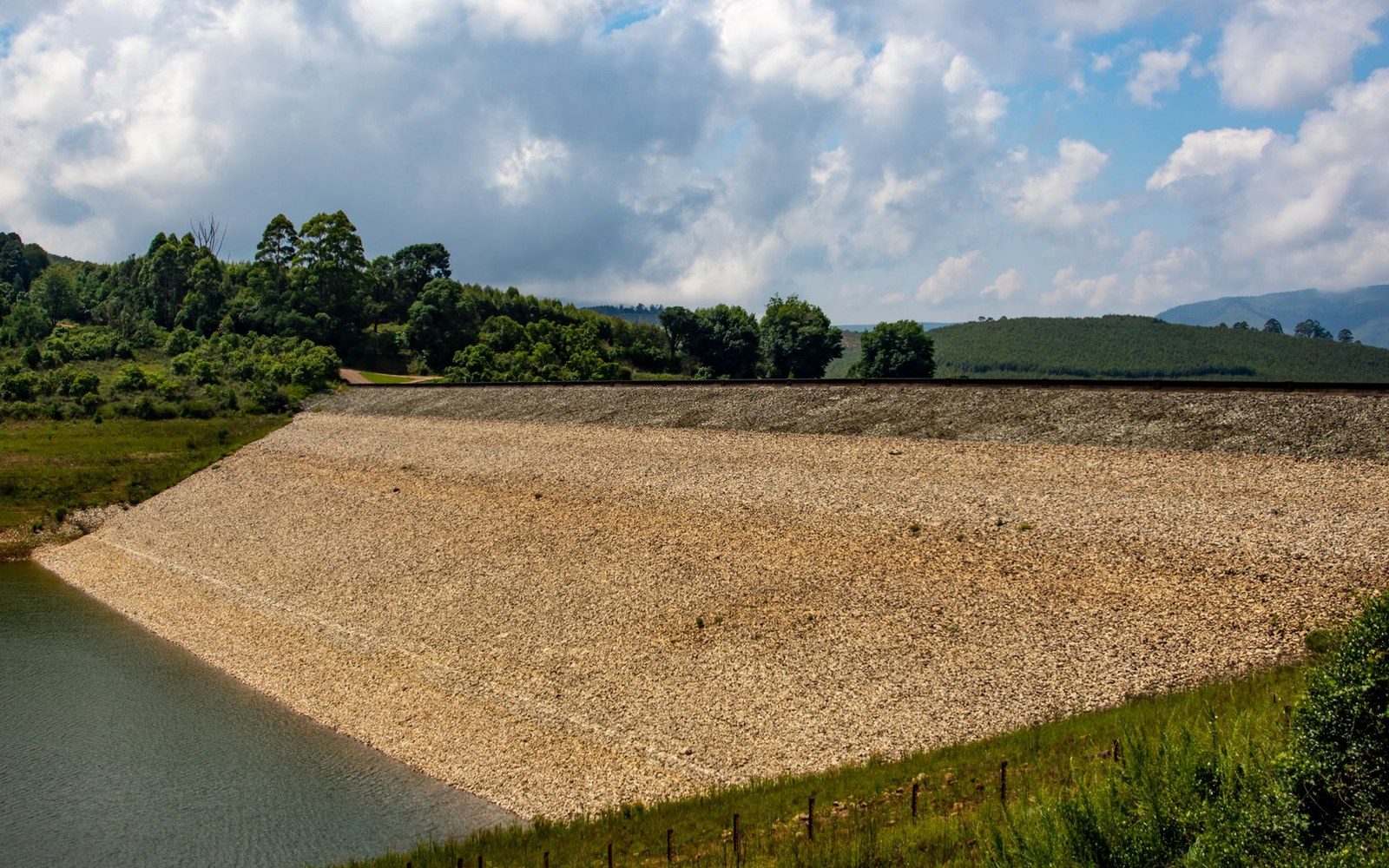
A retarding basin looks, from a distance, like any earthen dam. A broad embankment of compacted fill crosses a valley, rises to a graded crest, and shoulders against the hillsides on either side. What distinguishes the Miami Conservancy District's five basins from an ordinary impoundment is not visible in the embankment itself. It is visible — or rather, conspicuously absent — at the outlet.
There is no gate. There never was one.
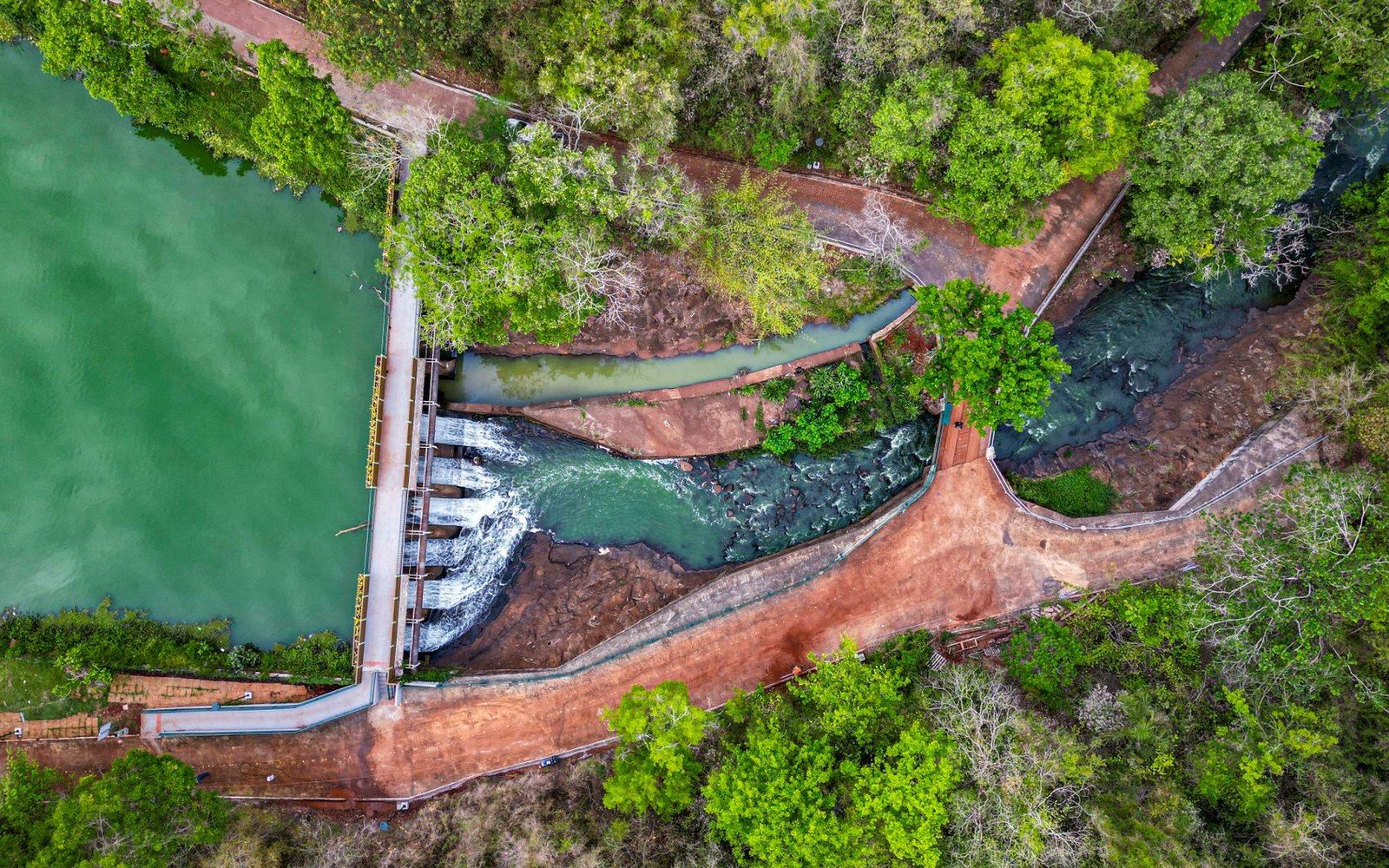
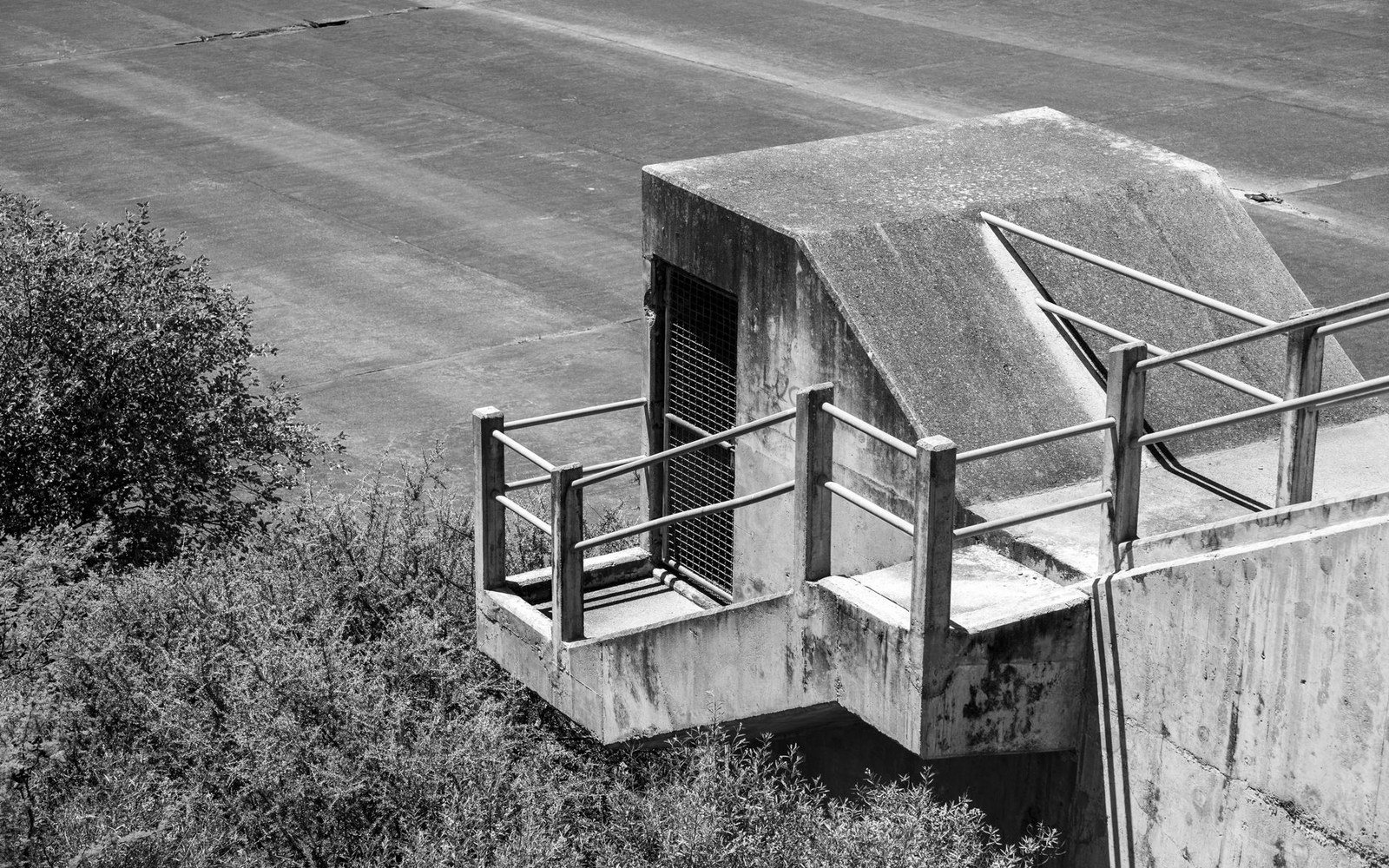
The outlet works of a retarding basin consist of an ungated conduit: a fixed-opening pipe or culvert set through the base of the embankment at a calculated diameter. It passes water continuously, at whatever head the pool behind it presents, with no mechanism to close it and no operator required to open it. On an ordinary day, the stream flows through it freely and the valley behind the dam is dry pasture or woodland. During a flood, the conduit cannot pass all the incoming water fast enough, and the valley fills — slowly, to a calculated elevation called the design water surface — until the storm passes and the stored volume drains back out through the same fixed opening.
That sequence, repeated across five basins in the Miami watershed, is the whole flood-control system. No reservoir, no spillway gates, no operating staff on call when a storm arrives at two in the morning.
Why the Gate Was Left Out
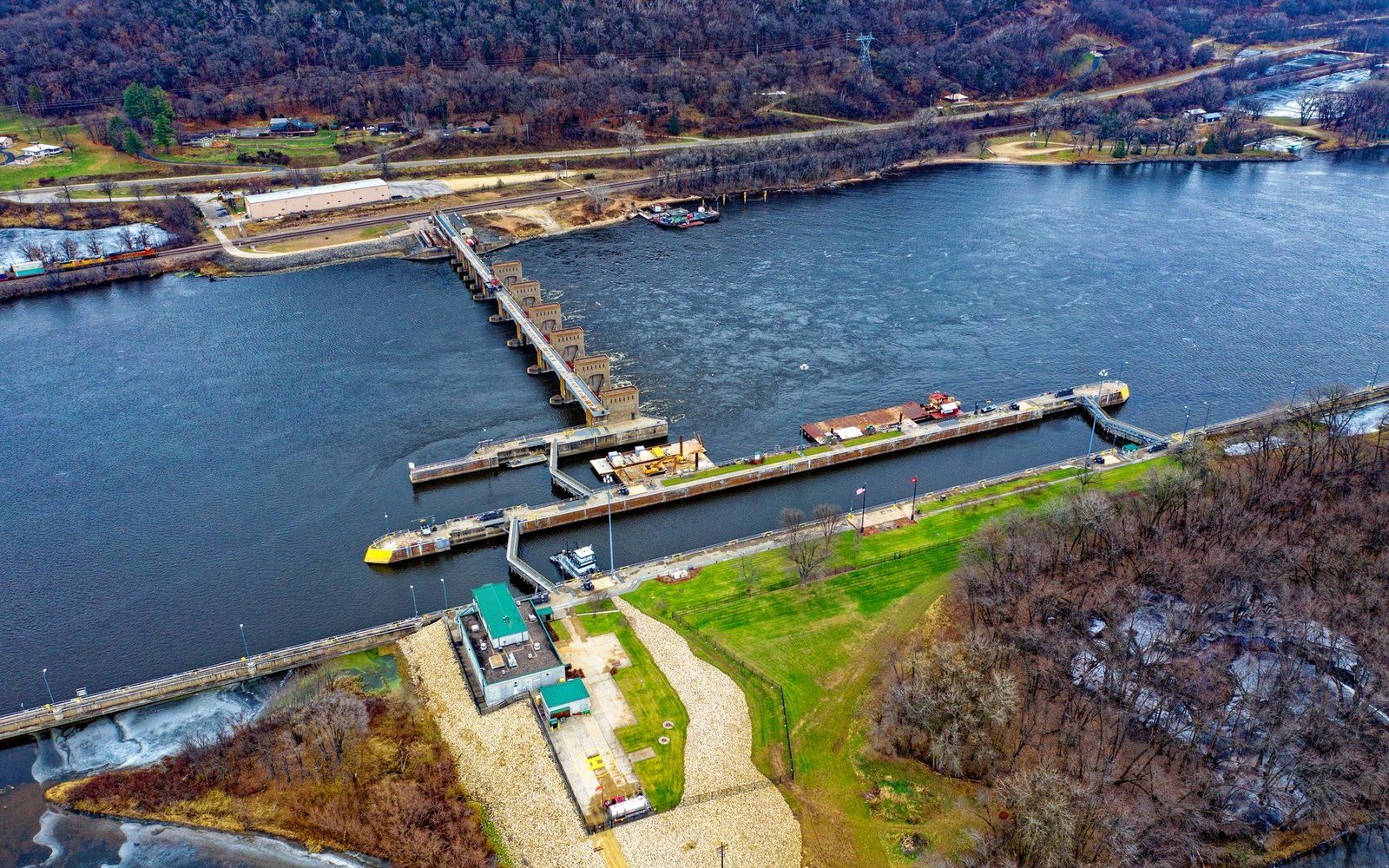
The absence of a gate is not an economy measure or an oversight. It is the structural expression of a deliberate engineering philosophy, worked out by Arthur Morgan and the engineers of the Miami Conservancy District in the years after the 1913 flood. Morgan's core argument was that a reservoir-based system — one that held a permanent pool and released water through managed gates — introduced operational risk at precisely the moment when operational failure was most dangerous. A gated outlet requires a decision about when to open, how far, and for how long. It requires someone present and competent to make that decision during a major flood event. It requires the gate mechanism itself to function correctly under debris load and flood pressure.
An ungated conduit has none of those dependencies. Its behavior is governed entirely by hydraulics: head drives flow, and the relationship between pool elevation and discharge is fixed by the conduit's geometry. The design water surface — the maximum pool the basin is engineered to reach during the controlling flood event — was calculated to remain below the crest of the embankment with a margin of freeboard. The embankment itself is an earthen structure compacted to resist that load without any mechanical component required to perform.
The result is a system that responds to a flood automatically, scales its storage to the severity of the event, and drains itself when the event ends. Between floods — which is to say, almost all of the time — the valleys are empty.
What the Embankment Actually Is
The embankment dams at the Miami basins are not monolithic concrete structures. They are broad, sloped fills of compacted earth, wide enough at the base to absorb seepage through a designed core, and gentle enough in slope to remain stable under saturation. At Taylorsville, downstream from Troy on the Great Miami River, the embankment spans the valley floor and ties into high ground on both banks. The ungated conduit at its base passes normal river flow around the clock; during recorded flood events, the basin has filled to depths that would have inundated the valley without it.
The logic chains: the basin fills because the conduit is sized to pass less than peak inflow; the basin drains because the conduit is sized to pass more than normal baseflow; the gate is absent because the conduit's fixed geometry does the work a gate would otherwise do, without requiring the gate to work. Every element of the structure is defined by what it deliberately lacks.