The Wire Still Ships from Troy
How a town that trains welders came to manufacture the consumables they burn through
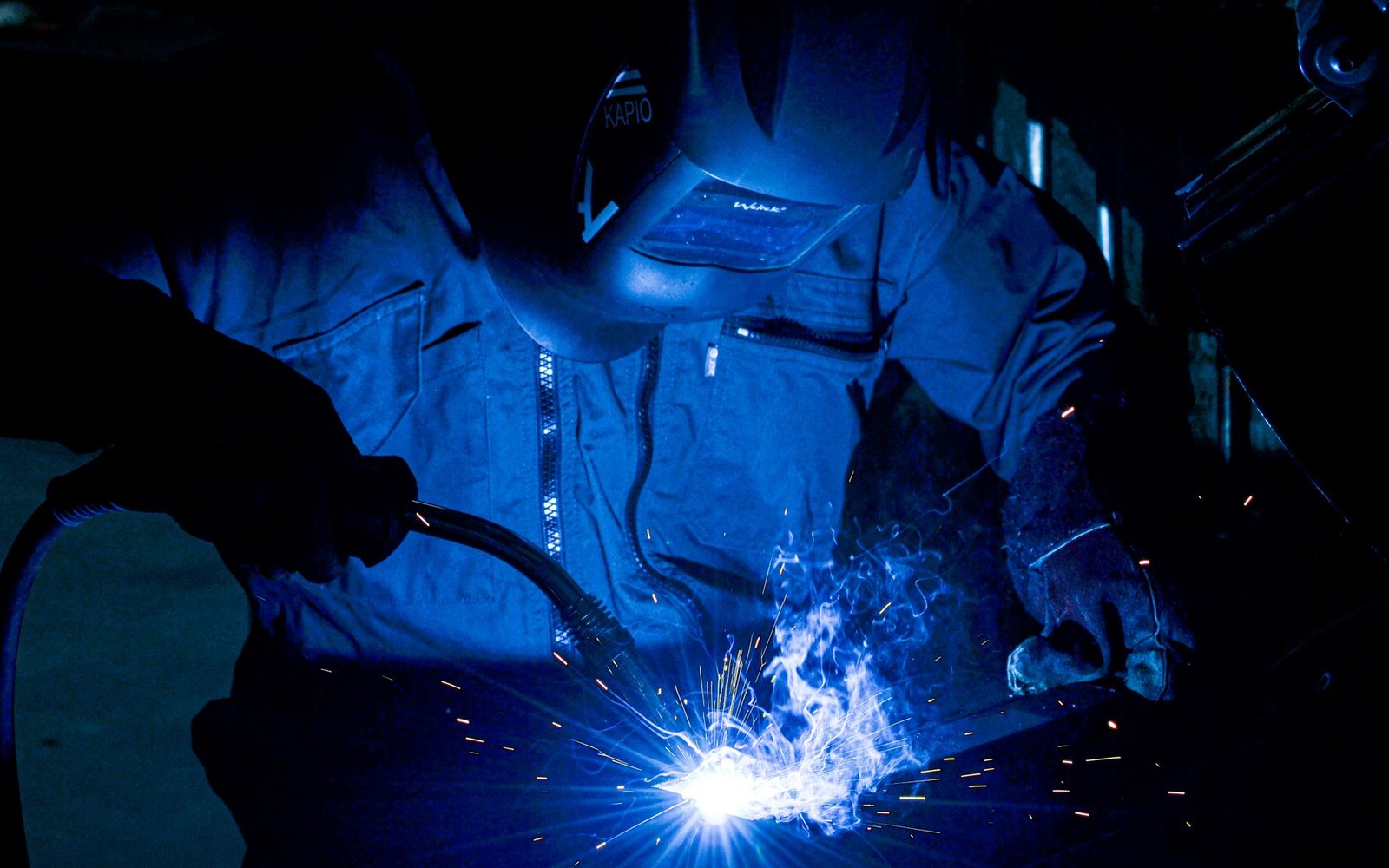
ITW Hobart Brothers has operated in Troy since the early twentieth century, and its product line is unglamorous in the way that essential things tend to be: spools of welding wire, tubular electrodes, flux-cored wire, and solid wire in diameters measured in thousandths of an inch. These are welding consumables — materials that become part of the weld bead or are spent in the arc — and Hobart Brothers makes them in volume for industrial customers across North America and beyond.
The operation sits inside Illinois Tool Works, the Chicago-based industrial conglomerate that acquired Hobart Brothers and folded it into a welding segment alongside other brands. ITW's scale gives Hobart Brothers distribution reach; Troy gives it a manufacturing base and, critically, a labor pool shaped by generations of welding culture in the Miami Valley.
The product range runs from solid MIG wire used in automotive stamping shops to flux-cored wires engineered for structural steel and heavy fabrication. Tubular wire — a steel sheath packed with flux and alloying agents — requires tight dimensional control and consistent fill composition; the wire-drawing and forming processes on the production floor are precision work dressed up as commodity manufacturing. Different wire chemistries serve different base metals, different positions, different shielding gas combinations. The catalog is not simple.
What makes Troy an unusually coherent location for this is the presence, a few miles away, of the Hobart Institute of Welding Technology, which has trained professional welders and welding engineers since 1930. The institute and the consumables company share a name because they share an origin — both grew from the Hobart Brothers electrical equipment business — but they have long operated as separate entities. The convergence that matters now is practical: the institute runs training programs that consume wire. The American Welding Society sets the qualification and certification standards that determine which wire properties matter. Hobart Brothers makes wire that meets those standards. The supply chain between them is short enough to be walked.
That proximity has no formal institutional structure — it is not a research partnership or a joint venture. It is simply geography, reinforced by a shared industrial vocabulary that makes the Miami Valley one of the denser concentrations of welding expertise in the United States. Welders trained in Troy learn on equipment fed by Hobart wire. When they move into the field, the brand follows.
ITW Hobart Brothers does not publicize production volumes, and the wire-drawing floor is not a public facility. What ships from Troy goes into pipelines, bridges, rail cars, and the structural frames of buildings — the kind of infrastructure that outlasts the spools it was made from.