Troy's Other Export
The Hobart Institute of Welding Technology — its founding in 1930, the range of programmes it runs, and its position as a national training resource at a moment when the American Welding Society's annual shortage figure has reached the tens of thousands.
When the Company Started Training the Country
The Hobart Institute of Welding Technology has occupied a deliberate, specific place in American industrial education since 1930 — not a trade school in the community-college sense, but a single-discipline institution purpose-built by a welding manufacturer to solve a skills problem that predated OSHA, predated the postwar manufacturing boom, and predates most of the debates now consuming workforce policy. That it sits in Troy, Ohio, rather than in a larger city is not incidental. ITW Hobart Brothers, the welding consumables manufacturer, has operated here for more than a century, and the Institute grew directly from that industrial root.
The founding logic was straightforward: Hobart Brothers was making welding wire, electrodes, and equipment at a moment when arc welding was still being absorbed into American manufacturing practice. Skilled operators were scarce everywhere. Rather than wait for the vocational-education system to catch up, the company established its own training operation. What began as an internal resource became, over the following decades, a nationally accredited institution drawing students from across the United States and beyond.
What the Institute Actually Does
HIWT — the abbreviation is in common use — operates out of a dedicated facility on Trade Square East in Troy. The programmes run from short-course certificates to longer credentialed sequences, and they cover the major welding processes used in structural, pipeline, and manufacturing work: shielded metal arc welding (SMAW, the traditional stick process), gas metal arc welding (GMAW, the wire-feed process dominant in high-volume fabrication), flux-cored arc welding (FCAW), gas tungsten arc welding (GTAW, the precise, slow process required for aerospace and specialty alloy work), and submerged arc welding for heavy industrial plate work. The list is not cosmetic — each process has a different heat input profile, different consumable chemistry, different operator technique, and different inspection standard.
Beyond process training, the Institute offers programmes in welding inspection and quality control, welding engineering technology, and robotic welding systems — the last of which reflects the actual production floor, where automated cells handle repetitive passes while human welders still set up, program, inspect, and handle the geometry that robots cannot reach. The curriculum also prepares students for certification examinations administered by the American Welding Society, the principal standards body for the trade in the United States, whose certifications carry weight with structural and pressure-vessel fabricators across the country.
That curriculum alignment with AWS standards is not incidental housekeeping. The Society's annual assessment of workforce need has placed the shortage of qualified welders in the tens of thousands every year, a figure that reflects retirements outpacing entries, the physical demands that shorten careers, and the persistent cultural undervaluation of skilled trades in American secondary education. HIWT sits directly in the gap that number describes.
The National Reach from a River Town
What makes the Institute consequential rather than merely useful is its scale relative to its setting. Troy's population is roughly 27,000. HIWT enrolls students from across the country — from Gulf Coast pipeline states, from Appalachian fabrication shops, from shipyards, from the aerospace supply chain — who come specifically because the Institute's single-discipline focus produces an intensity of instruction that a broad vocational program cannot. When a student is learning GTAW root passes on thin-wall stainless pipe, the instructor's entire professional context is welding. The adjacent programmes, the adjacent equipment, the institutional memory — all of it points the same direction.
The Institute also runs employer-sponsored training and customized corporate programmes, which means the students arriving in Troy are not always enrolled for a full sequence; some come because a fabrication company has identified a skill gap in an existing workforce and contracted HIWT to close it. This model connects the institution directly to the industrial clients whose quality requirements are setting the terms — pressure vessel codes, structural welding codes, aerospace specifications — rather than operating at one remove from the actual application.
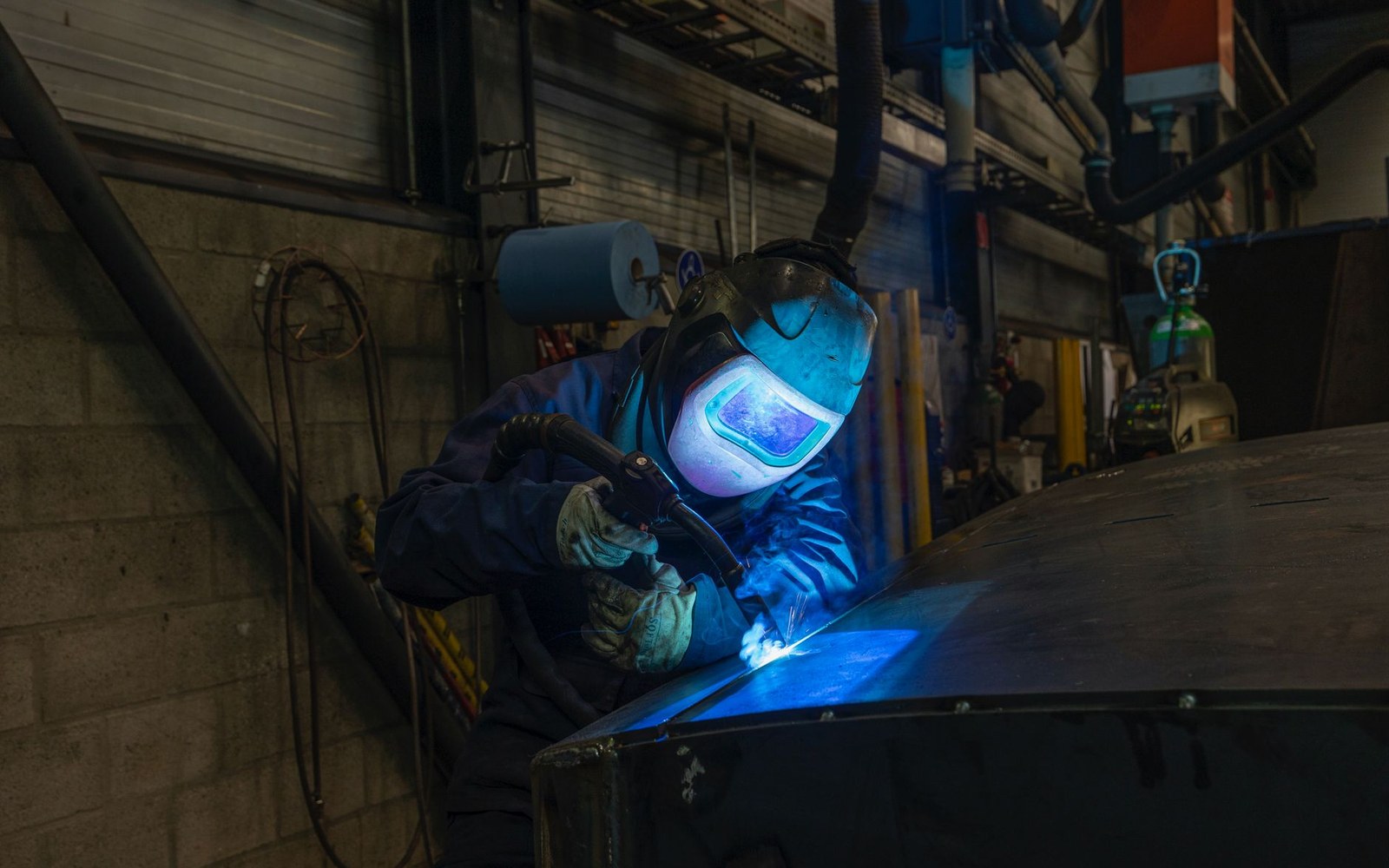
The physical proximity to ITW Hobart Brothers matters here in a way that is difficult to replicate. Hobart Brothers has operated as a division of Illinois Tool Works since 1996, and the Troy plant continues to manufacture welding wire and filler metals — the welding consumables that become part of every finished weld. The Institute is therefore situated next to an active production operation whose engineers and metallurgists understand, at a working level, the materials that HIWT students are learning to run. That is a different environment from a training center attached to nothing in particular.
1930 to Now: What Didn't Change and What Did
The founding date — 1930 — places HIWT in the same decade that saw arc welding displace riveting in structural steel fabrication and begin its long penetration of the shipbuilding and pressure-vessel industries. The American Welding Society itself had been incorporated only eleven years earlier, in 1919. The Institute was not anticipating a mature trade; it was being built alongside one.
What has changed since 1930 is the metallurgical and mechanical complexity of the work. The alloys in service today — high-strength low-alloy steels, duplex stainless steels, nickel-based superalloys for turbine components, aluminum for automotive and aerospace structures — demand tighter heat input control, closer attention to preheat and interpass temperature, and post-weld treatment that earlier industrial welding rarely required. Robotic systems have taken over the high-volume, low-complexity passes, which means the human welder's remaining domain is disproportionately the difficult, high-consequence, low-tolerance work. The skill floor has risen even as the perception of the trade has not always kept pace.
Alongside that technical drift, the inspection and quality side of the curriculum has grown in importance. Welding inspectors — credentialed under AWS's Certified Welding Inspector program — are the people who read radiographic and ultrasonic test results, interpret code requirements, and make the call on whether a weld in a refinery vessel or a bridge girder meets specification. Training them requires the same intimate familiarity with process variables that hands-on welding requires, because an inspector who has never struck an arc cannot reliably assess what a particular discontinuity means about the sequence that produced it.
The Institute's continued operation in Troy, rather than migration to a larger city with a larger labor market, reflects the logic of its founding. It is attached to a specific industrial place — the Hobart manufacturing operation, the Miami County manufacturing economy — and that attachment has been a stabilizing asset rather than a constraint. The American Welding Society's workforce data documents the demand that makes HIWT's output consequential nationally; Troy is simply where the institution capable of meeting part of that demand has always been.