Built in Troy in the 1920s
The WACO Aircraft Company and the biplanes it produced through the 1920s and 1930s — specific models, production numbers, and the WACO Air Museum and Aviation Learning Center that now holds and flies examples of the type.
When a small Ohio city became one of the most productive light-aircraft manufacturers in the country
The Company and Its Machines
The Weaver Aircraft Company was incorporated in Medina, Ohio, in 1920 and relocated to Troy by 1923, where it planted itself on the north side of town and stayed for two decades. The acronym WACO — drawn from the original company name — survived successive reorganizations and became the brand under which Troy's aircraft output reached pilots across the United States and abroad.
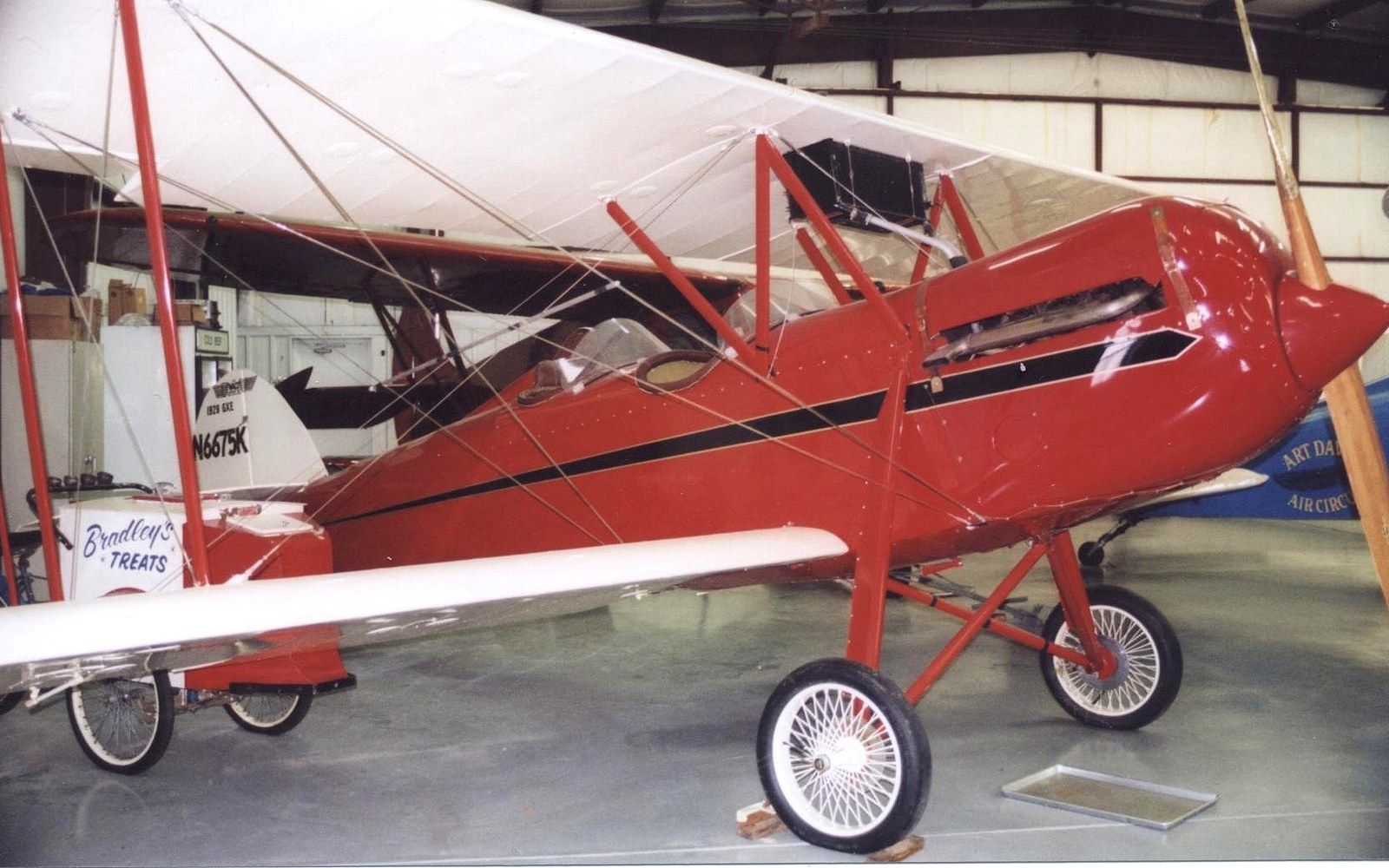
WACO's timing was fortunate and its engineering was pragmatic. The civilian aviation market of the early 1920s was thin, sustained largely by barnstormers and mail contractors, but the company found a formula that worked: open-cockpit biplanes built to a price that a working pilot could reach, using available American engines and conventional fabric-over-steel-tube construction. The Model 9, introduced in 1925, established the pattern — a three-seat, single-engine biplane with a welded steel fuselage frame and wooden wing spars, reliable enough to attract buyers who needed an aircraft that would actually earn its keep.
What followed was a systematic expansion of the type rather than a reinvention of it. Through the late 1920s and into the 1930s, WACO produced a long succession of variants differentiated primarily by engine choice and cabin configuration — the open-cockpit series gave way to the Custom Cabin series as the market matured and buyers began expecting enclosed accommodation. The Cabin Biplane models of the mid-1930s, including the YKC and ZKS series, seated four to five passengers and were marketed to charter operators and corporate users. At its peak in the late 1930s, WACO was among the largest producers of civil aircraft in the United States by unit volume, with total output over the company's active years running into the hundreds of airframes annually at the height of production.
The Second World War redirected the factory. WACO built the CG-4A military glider under contract — a very different product, fabric-covered and expendable by design, intended for a single combat delivery. The CG-4A was produced in enormous numbers across multiple manufacturers, and WACO's Troy plant contributed significantly to that program. When the war ended, the civil aviation market that returned was dominated by low-wing monoplanes from Cessna and Piper, and the biplane formula that had sustained WACO for twenty years had no commercial future. The company ceased production in Troy in 1947.
What Remained and What Was Rebuilt
The physical record of WACO production is preserved and kept airworthy at the WACO Air Museum and Aviation Learning Center, which operates at the Troy Municipal Airport on the city's northeast edge. The museum holds original airframes from multiple decades of production — open-cockpit examples from the 1920s alongside the enclosed Custom Cabin aircraft of the 1930s — and maintains a restoration workshop where aircraft are returned to flying condition using period-correct materials and methods.
The significance of the collection is not merely documentary. Flying restoration of vintage aircraft requires the same skills the original factory used: fabric covering, steel tube welding, and the rigging of biplane wing structures to precise incidence tolerances. The museum's continued operation as a working restoration facility, not just a static display, preserves a body of practical knowledge that would otherwise disappear.
Troy's location in the Miami Valley placed WACO within a regional aviation culture that was already technically serious. Orville and Wilbur Wright had conducted their sustained-flight experiments at Huffman Prairie, twenty miles to the south, beginning in 1904 — and the industrial expertise in metal fabrication, light engineering, and precision work that the valley had accumulated by the 1920s was exactly the labor pool a light-aircraft manufacturer needed. WACO was not an accident of geography. It drew on the same concentrated industrial capacity that made Miami County a manufacturing center across the twentieth century, and it left behind, in the museum and its airframes, a legible record of what that capacity could produce.