The Tavern That Predates the Town
The Overfield Tavern, built in 1808 before Troy was incorporated, survives as a structure from the settlement period — its construction, its documented use, and what it holds as a museum today.
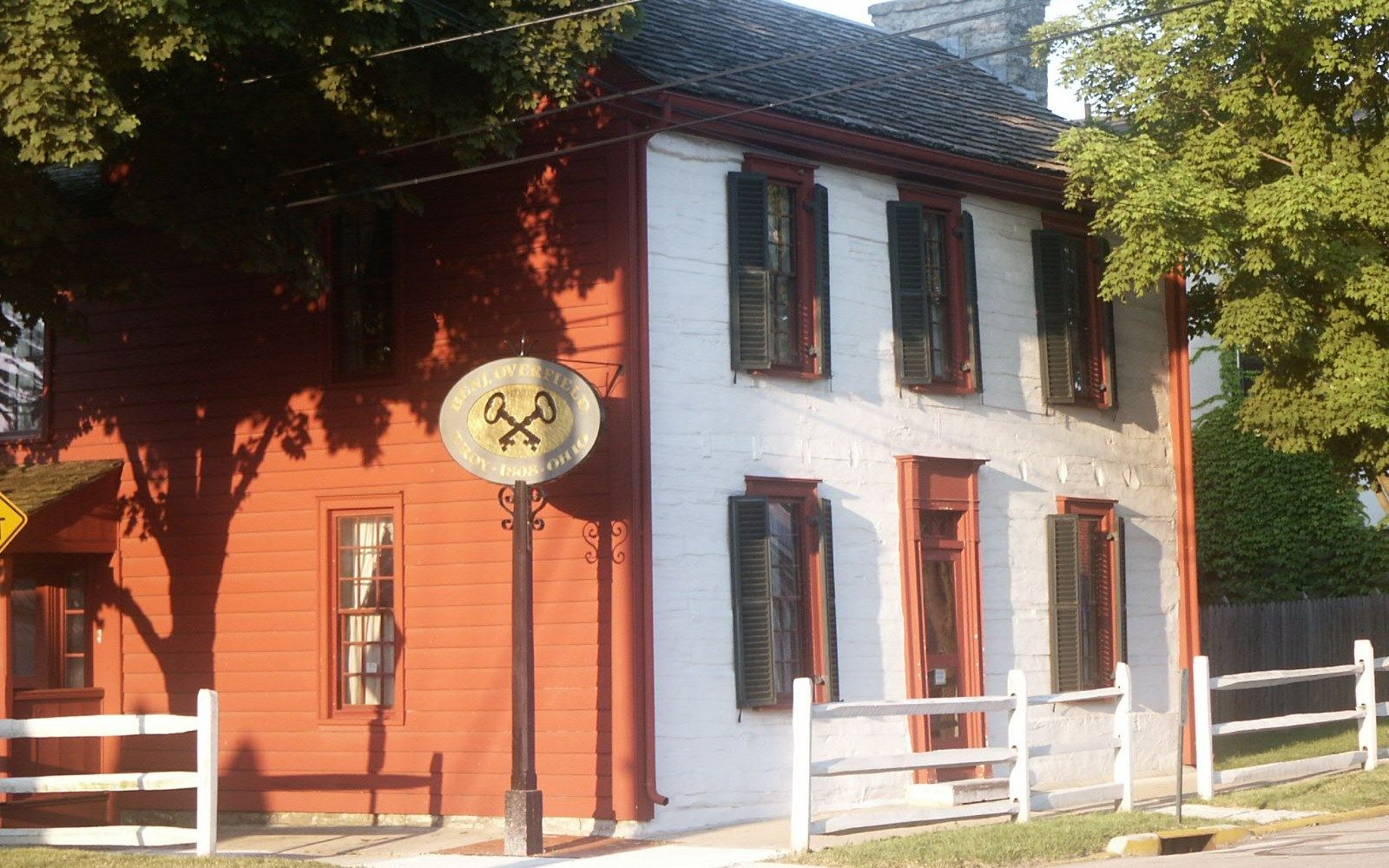
A log structure built in 1808 outlasted the settlement era to become the oldest documented building in Troy.
What Stands and What It Holds
Benjamin Overfield built his tavern on the bank of the Great Miami River in 1808, three years before Troy was formally platted as a town. The structure is hewn-log construction — a method common to Ohio's early settlement period, when timber was the immediate material and milled lumber a later convenience. It served simultaneously as an inn, a courthouse, and a community gathering point at a moment when Miami County had no dedicated civic infrastructure.
The tavern's documented uses are specific. County court sessions were held inside it before a permanent courthouse existed; it functioned as the de facto administrative center of early Miami County. Travelers moving through the Miami Valley along routes that would eventually formalize into the road network stopped there. It is, in that sense, less a curiosity than a functional object that happened to survive.
The building now operates as the Overfield Tavern Museum under the stewardship of the Troy Historical Society. The interior retains period furnishings consistent with early-nineteenth-century tavern use: rope beds, cooking equipment, the kind of material record that connects structural history to daily practice. Interpretive programming documents both the construction methods and the legal and commercial functions the building once served.
What makes the structure genuinely significant to an industrial or engineering reader is the construction itself. Hewn-log joinery of the 1808 period required careful corner-notching and chinking — a low-technology system that nonetheless demanded skilled execution to remain weathertight across two centuries. That this particular building survived while the settlement fabric around it did not is partly chance and partly the relative permanence of heavy timber framing compared to later balloon-frame construction.
Troy was incorporated in 1814. The tavern is six years older than the incorporated town, which means it belongs to a pre-municipal moment — the window between initial Euro-American settlement of the Miami Valley and the formal legal organization that followed. As a physical object, it documents that interval more legibly than any written record.