F&P America and the Stamping Supply Chain
F&P America Manufacturing's Troy operation — what it stamps, how it fits into Honda's parts supply chain, and what the EV retooling at Anna means for a press shop that has supplied the engine plant for years.
Steel In, Structure Out
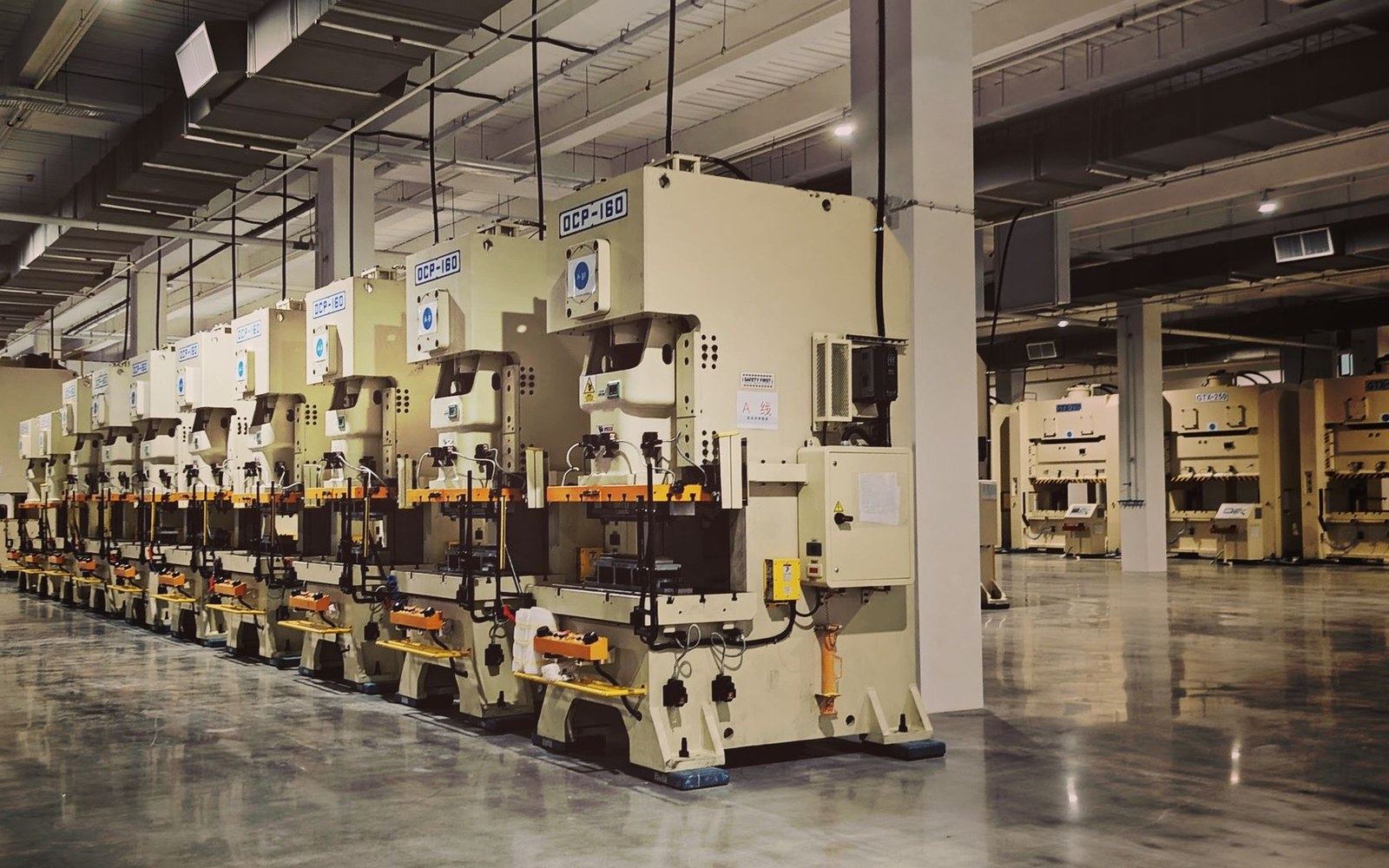
F&P America Manufacturing operates a stamping and assembly plant in Troy, Ohio, supplying structural and body components to Honda's North American production network. The parent company, F&P — Futaba Industrial Co., Ltd., a Japanese tier-one supplier — established its Troy operation to sit within practical distance of Honda's Anna engine plant in Shelby County and the broader cluster of Honda-aligned manufacturing across west-central Ohio.
The Troy plant's core business is sheet-steel stamping: raw coil stock enters, large-tonnage presses form it between hardened dies, and finished structural components exit for shipment to assembly lines. Stamping is a volume process — cycle times measured in seconds, tolerances measured in fractions of a millimeter — and the economics depend on proximity to the customer. Troy's position along the US-25 and I-75 corridor keeps F&P within the just-in-time delivery window that Honda's supply chain requires.
For years, a significant share of F&P America's Troy output has fed the Anna engine plant, which has produced Honda's four-cylinder and V6 engines for North American vehicles since 1985. Structural stampings — brackets, cradles, mounting components — follow the engine into vehicle assembly, so an F&P press run and an Anna casting run are effectively synchronized.
That synchronization is now under pressure. Honda has committed roughly $700 million to retool the Anna plant for electric drive unit production, shifting from internal-combustion engine blocks to the integrated motor-gearbox-inverter assemblies that power battery-electric vehicles. The structural geometry of an electric drive unit differs substantially from a conventional engine and transmission stack. Brackets that located a V6 in an engine bay do not locate an e-axle; the stampings change with the architecture.
What that means for a press shop like Troy's is a qualification cycle: new dies, new part numbers, new dimensional requirements signed off against Honda's engineering specifications before a single production piece ships. According to the U.S. Department of Energy's alternative fuels and vehicle data resources, the transition to battery-electric platforms is accelerating across the domestic market, which compresses the timeline suppliers have to complete that requalification while still running existing engine-era programs.
Miami County's manufacturing sector has absorbed supply-chain pivots before — the shift from carbureted to fuel-injected engines reshaped supplier tooling in the 1980s, and the move from cast iron to aluminum blocks forced comparable die investments a decade later. The EV transition is larger in scope, but the underlying industrial logic is familiar: the press shop that qualifies first keeps the work.