Tipp City's Canal-Era Brick
Tipp City's main street as a legible piece of canal-era commercial architecture — the building stock, the street width, and the relationship between the town's layout and the canal that ran through it.
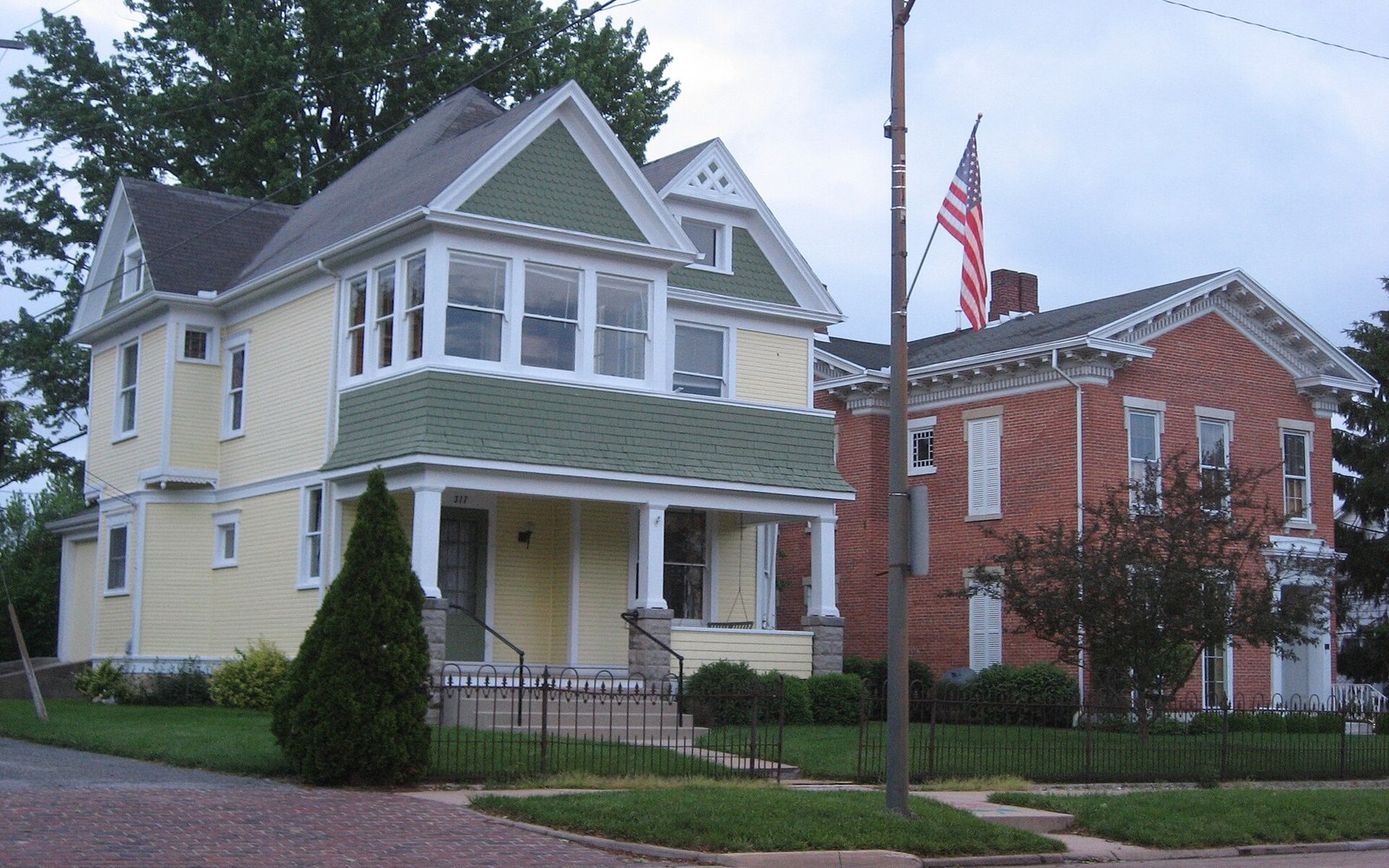
A grid laid out for canal commerce, readable still in the storefronts on Main Street.
The Street the Canal Built
Tipp City sits roughly six miles south of Troy on the Great Miami River, and its Main Street follows a logic older than the automobile. The town was platted in 1840, the year after the Miami and Erie Canal reached this stretch of the valley, and the commercial grid was drawn to serve the traffic the waterway promised: goods moving between Cincinnati and Toledo, and the merchants who wanted to intercept them.
The canal ran immediately west of the town center, close enough that warehousing and trade could happen at the edge of the right-of-way. Main Street's generous width — wide by the standards of a small Ohio town — reflects the practical need to turn loaded wagons between the canal landing and the storefronts. That dimension survived the canal's obsolescence; the roadbed was simply kept and paved.
What also survived is a continuous run of two- and three-story brick commercial buildings along the north-south spine of downtown. The construction dates cluster in the decades between roughly 1850 and 1890, a span that tracks the canal's operating years and the short railroad prosperity that followed before the trade shifted decisively to larger cities. The brick is locally sourced, a warm buff-and-red mix typical of Miami Valley vernacular commercial construction. Parapets are flat or very shallowly corbeled; storefronts at street level have been altered in successive eras, but the structural bays above the signboards retain their original proportions — tall, narrow double-hung windows, load-bearing masonry piers between them, and the slight vertical exaggeration that distinguished a merchant's building from a residence.
The Ohio History Connection's Historic Preservation records document several of the Main Street properties as contributing resources to the town's historic character. Reading the block as a unit, rather than building by building, the canal-era origin remains clear: a street scaled for commerce, built in brick because the merchants who built it expected permanence, and preserved partly by the same geographic quietness that made the canal's successor economy pass Tipp City by.