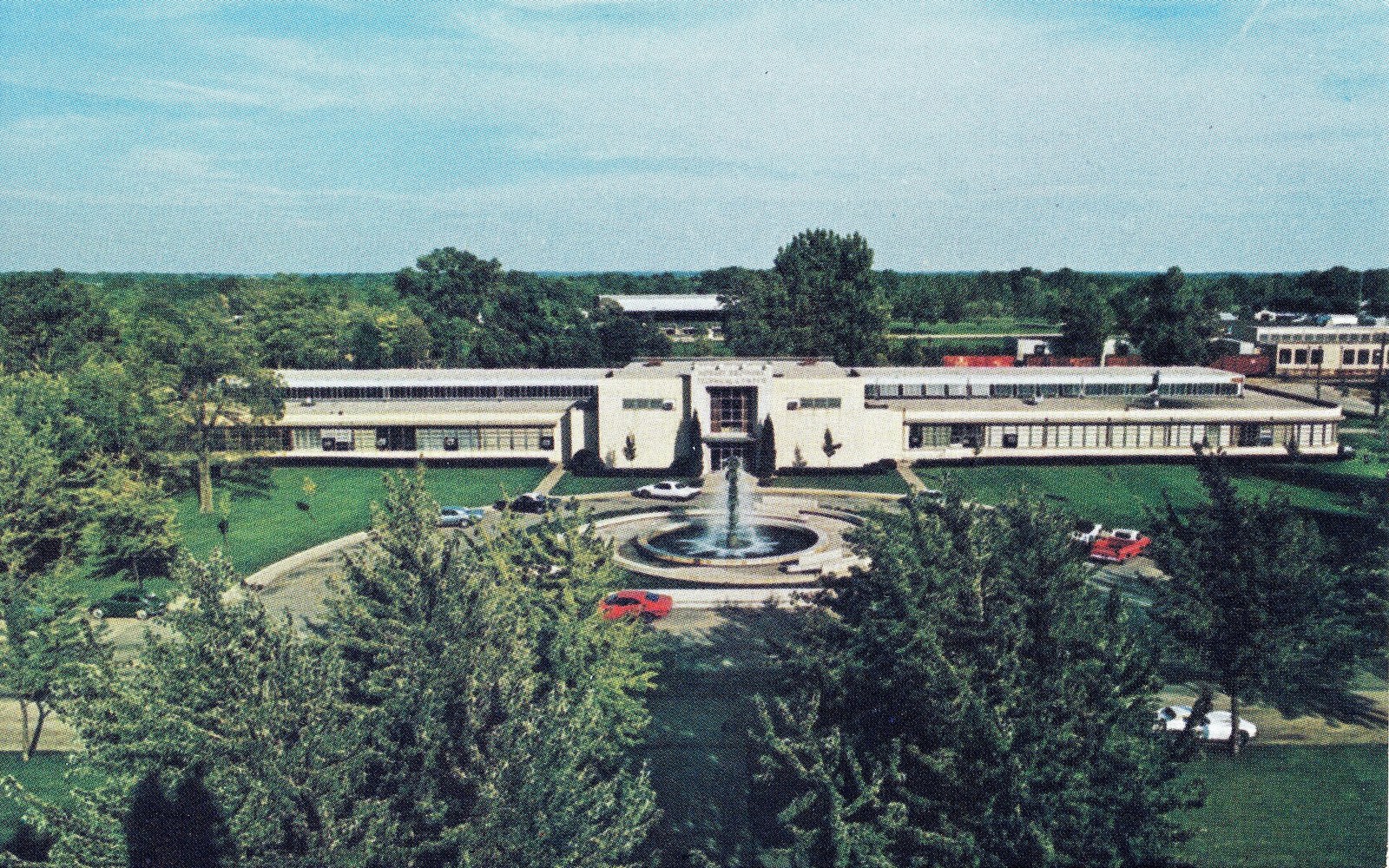
Twenty Miles South and the Record They Set
Dayton in relation to Troy and Miami County — the Wright brothers' documented test-flight record in the Miami Valley, and how that record is held and displayed at the National Museum of the US Air Force at Wright-Patterson.
Dayton sits at the southern edge of Miami County's economic orbit — and at the centre of the documented history of powered flight.
The Distance and What It Means
Troy is twenty-two miles north of Dayton by road; the Great Miami River connects them through the same valley. The two cities share a watershed, a flood-control district, and — less obviously — a chapter of aviation history that belongs to neither city exclusively but to the flat, open terrain between them.
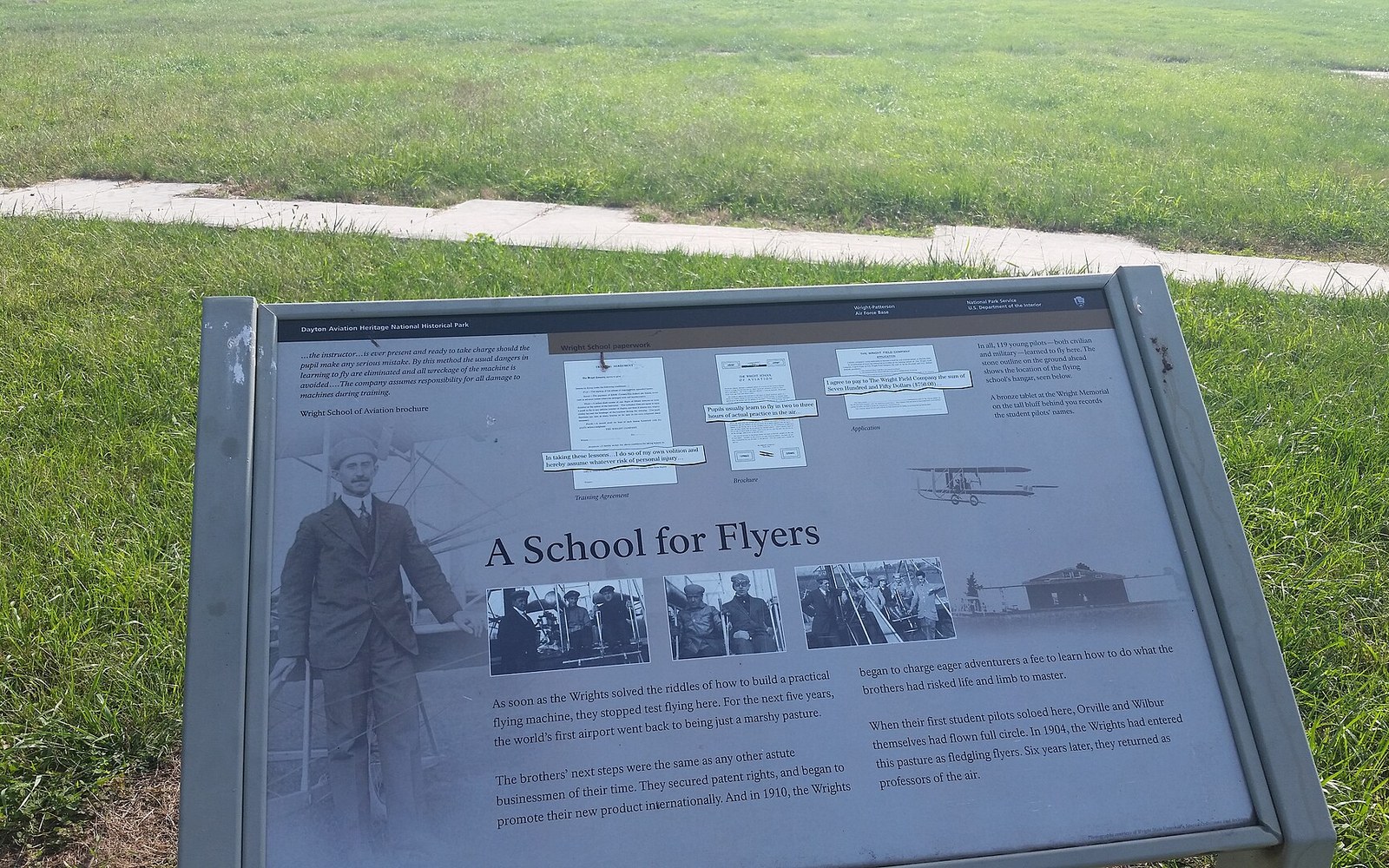
Orville and Wilbur Wright conducted their sustained flight experiments not at Kitty Hawk, where the December 1903 flights proved the principle, but in a cow pasture called Huffman Prairie, eight miles east of Dayton near the village of Huffman, Ohio. It was there, across 1904 and 1905, that they solved the harder engineering problems: banking, turning, and remaining airborne for meaningful durations. The flight of October 5, 1905, in the Flyer III, covered roughly 24.5 miles in 39 minutes and 23 seconds — a controlled circuit repeated again and again over the same field. That performance, not the 12-second hop at Kitty Hawk, established the airplane as a practical machine.
Huffman Prairie is now part of Wright-Patterson Air Force Base, and the site itself is a National Historic Landmark within the base perimeter. The record of those flights — the logbooks, the photographs, the documented times and distances — is held and interpreted a short distance away at the National Museum of the United States Air Force, which occupies several large buildings at the western edge of Wright-Patterson. The 1905 Flyer III itself is displayed nearby at Carillon Historical Park in Dayton, while the museum holds other Wright aircraft and documentation. No other collection of American aviation artifacts comes close in scale or in the directness of its provenance.
From Troy and Miami County the practical connection is straightforward: Wright-Patterson's northern boundary reaches toward Dayton's eastern suburbs; the museum is roughly thirty minutes by road from Public Square in Troy. For anyone working through the industrial and engineering history of the Miami Valley — flood control, manufacturing, materials — the Wright collection is the regional record of what the same flat geography and the same culture of mechanical precision produced in an adjacent generation. The prairie and the test flights are not incidental to the valley; they are, in a precise sense, its most documented export.